
Download Ebook Introducing Plato: A Graphic Guide
When obtaining the publication Introducing Plato: A Graphic Guide by on-line, you could review them wherever you are. Yeah, even you are in the train, bus, hesitating checklist, or other locations, on-line book Introducing Plato: A Graphic Guide can be your buddy. Every time is a great time to read. It will enhance your expertise, fun, entertaining, session, as well as encounter without spending more money. This is why on the internet e-book Introducing Plato: A Graphic Guide becomes most really wanted.
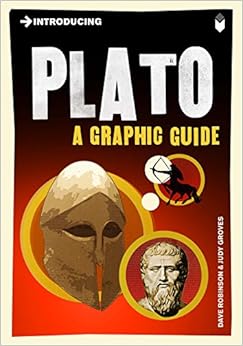
Introducing Plato: A Graphic Guide

Download Ebook Introducing Plato: A Graphic Guide
Discover much more experiences and abilities by reviewing Introducing Plato: A Graphic Guide This publication becomes a book that you truly require now, do not you? Are you still assuming that analysis is nonsense task? Just how silly, when many individuals are starting to learn about several points, will you remain completely without any progression? This is what you will do to be the much better individual?
Having a brand-new publication in long times will make you feel so proud of you. You must be proud when you could reserve the cash to acquire the book. Nevertheless, many people are really uncommon to do this way. To get over properly of analysis, Introducing Plato: A Graphic Guide is presented in soft documents. Also this is only the soft data; you could get it a lot easier as well as faster compared to buying it in the shop.
When you have this behavior to do in daily, you can be abundant. Rich of experience, rich of understanding, lesson, and abundant of competent life can be obtained properly. So, never be uncertainty or confused with what this Introducing Plato: A Graphic Guide will certainly offer to you. This newest book is one more time a really remarkable publication to review by people like you. The web content is so appropriate and also matches to what you require now.
About this publication, you might not need to be stressed to obtain it as checking out product. This publication shows how you could start to like analysis. This publication will certainly show you just how modernity will certainly complete the life. It will also prove that entertaining publication will be additionally factual publication that rely on how the author tells as well as utter the meaning to the visitors. Based on this case, now you must choose Introducing Plato: A Graphic Guide as one of your collections to check out. Once again, that's for your reading product.
About the Author
Dave Robinson: Dave Robinson has taught philosophy for many years and is the author of numerous Introducing series titles. He is now a part-time lecturer in Critical Studies and lives in Devon.Judy Groves: Judy Groves is a painter, graphic designer and illustrator. She has illustrated numerous titles.
Read more
Product details
Series: Introducing
Paperback: 176 pages
Publisher: Icon Books; Reprint edition (January 11, 2011)
Language: English
ISBN-10: 9781848311770
ISBN-13: 978-1848311770
ASIN: 184831177X
Product Dimensions:
5 x 0.5 x 7 inches
Shipping Weight: 5 ounces (View shipping rates and policies)
Average Customer Review:
4.2 out of 5 stars
20 customer reviews
Amazon Best Sellers Rank:
#509,314 in Books (See Top 100 in Books)
Fun. Easy. Can probably be read by most under 3 hours. Seems good for high school students, or anyone not trained philosophically.
Used this to help refresh my memory of Plato before teaching The Republic to my college students. Very helpful and reminded me of Plato's context and relation to other philosophers.
Nice little introduction to main concepts and some critical responses (albeit sometimes not formerly credited, but sometimes so) make this intro an entertaining book, something Nietzsche and Heidegger would have hated on principle, (and Plato?) but probably would have liked if they were boring consumerist post-moderns like us.Notable aspects include the major ideas from the main works, as well as some scant (should be more really) biographical info on the philosopher behind the thoughts that set the tone for over two thousand years of all western philosophic questions and pondering. Both the continental and analytic tradition owe their origins to Plato as the first recorder of philosophy in dutifully diligent written format, which would continue thereafter).
This graphic novel series is wonderfully done. Great for adults who just want a refresher or a great way to get kids interested in these usually profound subjects.
Very Good. On time and as expected. Highly recommended. Will use again and recommend to others. Very good very good.
Plato was an Athenian cosmopolitan aristocrat and student of Socrates. He believed that the best society was one ruled by philosopher kings, and that all wise men were aware of their own ignorance. He established the first academy and was tutor to young King Dionysius II and Aristotle. He died a pauper at 80.Plato's philosophy began by asking questions that went beyond religion, myths and superstitions in a search for life's uncertainties. Before philosophers, along with its many warring gods, the sophists ruled Athens. Plato wrote his "Republic" to set them all straight.In addition to Socrates, Pythagoras, and Heraclitus also influenced Plato. Pythagoras' religion was numbers; Heraclitus believed change to be the fundamental process of nature; and Socrates was obsessed with fundamental questions of human virtue: What should humans strive for? His answer was: that man should seek truth through knowledge.Socrates invented the first methodology of philosophy, the "Socratic Method." It involves a dialectic consisting of structured enquiries bound together by logical inferences and nested deductions. Socrates also believed that everything had an underlying "essence" or constituent part which could be revealed through dialectic debate.Plato dedicated his life and most of his works and teachings to exposing the world to Socrates' methods and thinking. Plato's first work, Eurthyphro, is the first of several imagined dialogue with Socrates on his way to his death. It was about the ultimate source and meaning of moral knowledge.He begins by pointing out that "doing the right thing" and "doing what god demands or approves," are not necessarily the same things. Morality does not always reduce to god's teachings. For morality and religion often are at odds. To be moral, often means violating religious rules and teachings. Morality grows out of man's interactions with other men.His second work, the Apology, is Socrates' imagined non-apology for having been found guilty of heresy. Crito, his third work, is a dialogue in which Plato offers Socrates an escape plan, but one Socrates rejects, preferring to go to his death as a non-criminal martyr of state injustice, than fleeing and thus becoming a real criminal by actually violating state law. Phaedo, is Plato's death bed confessions to fellow philosophers. It expresses the notion that philosophical thinking is designed to free the mind, and death is just another step in this process. After all, it is the soul that remains after death and that also has the ability to grasp intellectual ideas, therefore only the soul is immortal.It is Plato's epistemology, however that made him famous. Plato believed that there were two worlds, the surface world of the particulars; and the underlying world of ideal forms, or universal classes that make up the substrate of all material essences. All of Plato's mentors, Socrates, Pythagoras, and Herclitus, had impressed upon him that it was futile to look for knowledge in the empirical world. He was especially impressed by mathematics which he thought was the perfect form of knowledge. Four stars
I'm just starting my education in philosophy, and Plato is my first stop. This book is a great primer and Introduction to Plato. It briefly covers Plato's life, his world, and then his philosophy.
I read "Introducing Plato" last night. I picked it up at the book store because Plato is referenced repeatedly in "Objectivism: The Philosophy of Ayn Rand". "Introducing Plato" covers many of the ancient Greek philosophers of the period and shows how they influenced or were influenced by Plato. It covers his life, his philosophy, and his influence through the ages.By reading "Introducing Plato", I now have a far better understanding of Objectivist philosophy. Before I read this book, I found some of Rand's terminology a bit odd but now I realize that she was engaged in a conversation with the ancient philosophers that I had walked in on toward the end. I also see where she agrees and where she deviates with them on the important questions. I would recommend "Introducing Plato" to any student of Objectivism that has not previously studied the ancients.Ayn Rand was no fan of Plato. She prefers to praise Aristotle, his student of twenty years. I see that a second edition of "Introducing Aristotle" in coming out in 2006 August. I am looking forward to it.
Introducing Plato: A Graphic Guide PDF
Introducing Plato: A Graphic Guide EPub
Introducing Plato: A Graphic Guide Doc
Introducing Plato: A Graphic Guide iBooks
Introducing Plato: A Graphic Guide rtf
Introducing Plato: A Graphic Guide Mobipocket
Introducing Plato: A Graphic Guide Kindle

0 komentar:
Posting Komentar